
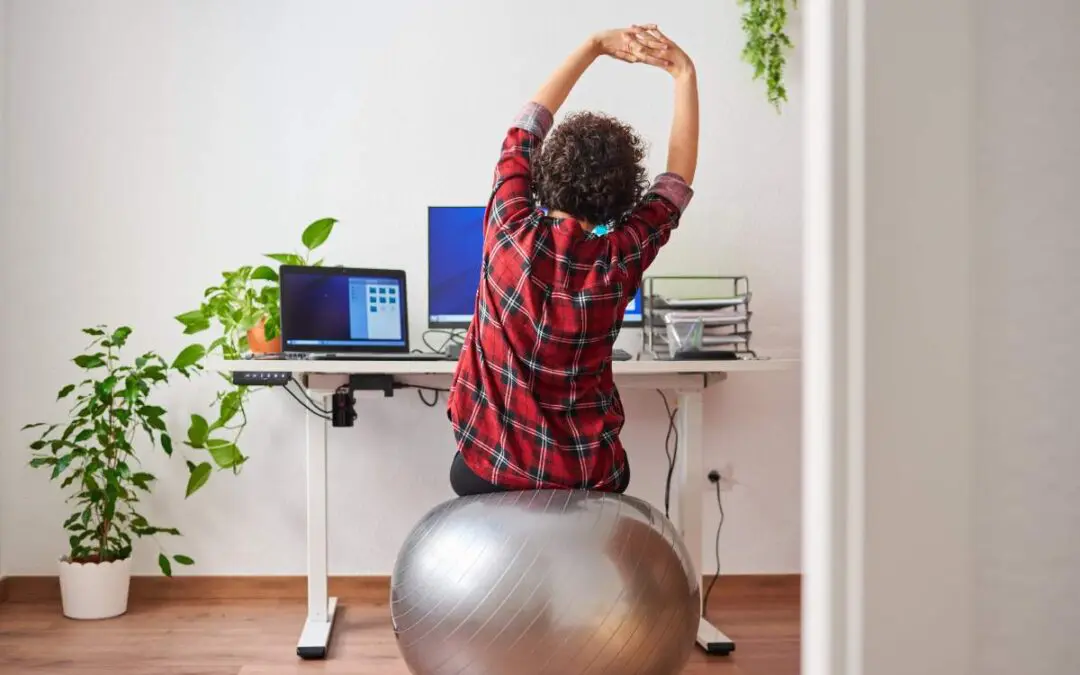
After working at your desk all day, ever feel like your body’s turning into a human-shaped paperweight? Modern work culture isn’t optimized for movement, which actually can lead to decreased productivity– a stagnant body makes for a stagnant mind. With a shift in perspective and a mix of neuroscience, body mechanics, and smart routines, you can sharpen your energy and focus without leaving your chair or looking like you’re auditioning for a fitness infomercial. Welcome to movement redefined: if you’re ready to build better energy from the desk up– this guide is your blueprint.
Movement is a Mindset
The biggest barrier is mental. Movement should not be synonymous with difficulty and stress. Movement is not just some inconvenient thing you have to do; it’s a stimulating, health-building tool you get to use. You need to shift how you think about motion. Instead of seeing exercise as an output of fitness culture, start treating movement as an input for clarity.
Regular activity not only “gets the blood flowing,” but it also nudges your brain to release the neurotransmitter that supports motivation, focus, and goal-oriented behavior. When you move, even a little, your circulation improves, oxygen delivery increases, and your cognitive sharpness gets a boost.
See, the issue isn’t sitting, it’s being still without intention. Your desk doesn’t need to be a dead zone. When movement becomes part of how you manage energy, not something you defer to later, you unlock a new layer of discipline and activate systems that keep you smart, engaged, and mentally locked in. It also becomes one of the simplest strategies for work stress management, helping you release tension before it builds into burnout.
Chair-Powered Moves that Work
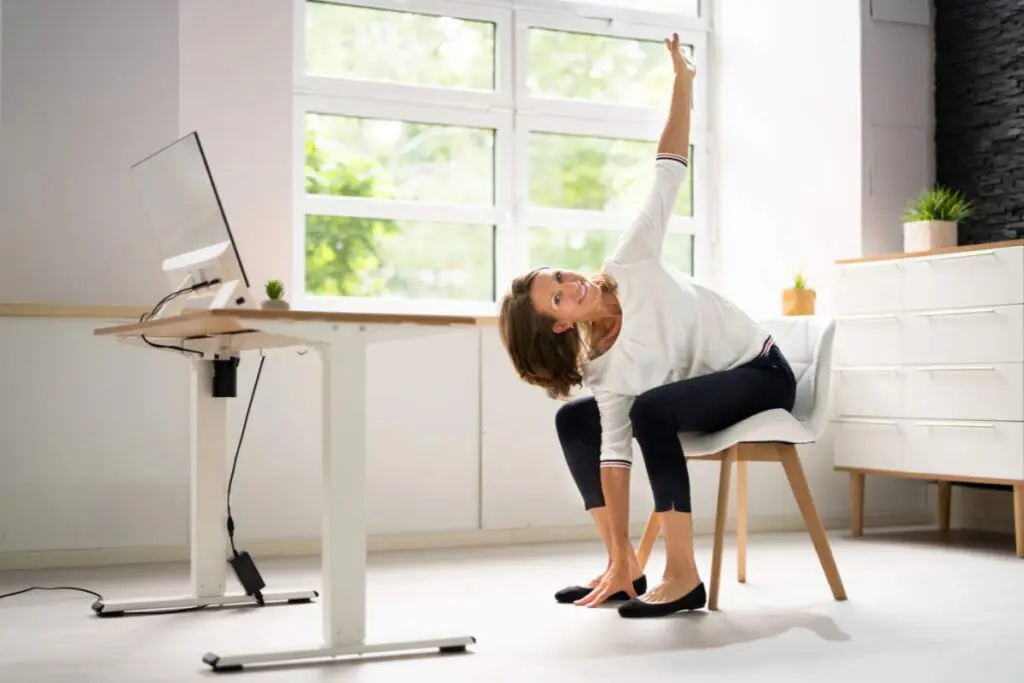
So you sit at a desk all day. What you need is a smarter relationship with your chair. Most office setups encourage slouching, disengaging your core, and limiting blood flow. With a few targeted movements, your chair can become your newest performance tool:
- Glute squeezes: Sit upright with feet flat and squeeze your glutes tightly for a count of 5, then release– repeating 10 to 15 times. This reactivates your posterior chain, which supports good posture, lower back health, and improved blood flow when seated for long periods.
- Core bracing: Tighten your abdominal muscles like you’re about to be punched in the stomach and hold for 10 seconds while keeping your spine tall and neutral. Do 3 to 5 reps every hour to reinforce spinal support and reduce lower back fatigue.
- Ankle pumps: While seated, point your toes away from you, then flex them back toward your shins– repeating 20 to 30 times per leg. This stimulates circulation in your lower legs, preventing stiffness and reducing risk of poor venous return.
- Spinal twists: Plant both feet on the ground. Place your right hand on your left knee, twist gently through your torso, and hold for 5 seconds. Switch sides. This maintains spinal mobility and resets posture when you’re stuck in one position too long.
- Neck rolls: Drop your chin slightly, then slowly roll your head in a circle, pausing at tension points. Reverse direction after 3 to 4 rolls. This helps release neck stiffness from screen strain and poor upper-back posture.
These movements create neuromuscular wakeups– a way to re-engage sleepy systems that power down during long bouts of stillness. But tools can make a difference too, especially when paired with support that targets your circulatory edge. A formula that blends beetroot and adaptogens can help the oxygen and nutrient flow your body needs when you’re seated for hours. Start with what you probably already have around you:
- Chair and desk: Use the backrest for support during seated core or glute work. Grip the sides of your chair or edge of your desk during spinal twists or resistance band pulls to stay stable and aligned.
- Foot roller or massage ball: Keep one under your desk and roll it beneath each foot for 2–3 minutes. Helps relieve tension in the fascia, wake up nerve endings, and promote circulation during passive moments like meetings or reading.
- Resistance bands: Store one in a drawer or bag. Loop around your thighs for seated abductions, or anchor it under your feet for light shoulder presses. A few minutes of band work can re-energize muscles without breaking your workflow.

Feel Better, Focus Better
Movement also rewires how your body and brain work under pressure. Light physical activity helps to increase blood flow, oxygen circulation, and neurotransmitter activity, which means more clarity, more stamina, and no more afternoon slumps.
Add your bad posture to the equation and your energy tanks even more quickly. Your slouch isn’t simply a cosmetic issue– it literally restricts your breaking, circulation, and tells your brain to shut down. A few strategic resets throughout the day can make a measurable difference in productivity and how you feel and how you focus– no ergonomic overhaul needed:
- Chin tucks: Sit up straight and gently touch your chin back to create a double chin. Hold for five seconds and repeat this movement ten times to realign your neck and counteract forward head posture from screens.
- Shoulder rolls: Raise your shoulders toward to years, and roll them back and down in a circular motion– repeating this 10 to 15 times. This relieves tension from the traps and upper back after long bouts of typing.
- Desk angles: Sit straight and place your arms in a goalpost shape, slowly raising and lowering them like you’re making a snow angel. Make sure your shoulder blades are engaged and your core is braced. For 8 to 10 reps to reactivate your upper-back muscles.
Stack Micro Wins Into Your Routine
If you want movement to really stick, you need to stop treating it like an extra task. Instead, start treating it as something you layer into your routine. Movement belongs in margins– those brief transitions when your brain is already shifting gears. After a video call, instead of mindlessly closing tabs, roll your shoulders back a few times to reset. When you clear your inbox, add a quick set of chin tucks before your next task. Waiting for a file to load? That’s not dead time– that’s the perfect window for a set of desk angels.
These small acts and healthy work habits – realigning your spine, stretching out your neck– can compound over time. Rather than adding to your day, this micro-habit stacking allows you to reprogram the downtime you already have. Add a solar-coded calendar reminder or a browser nudge to reinforce a system that automatically maintains energy.
Conclusion
Don’t let sitting all day wreck your focus and body. It’s time to reframe what movement looks like: a glute squeeze while your file loads or a posture reset after your next Zoom call. These low-effort actions are key momentum-builders. Paired with existing simple at-home workouts when you’re out of the office, they help you stay active throughout the day instead of relying on a single workout to undo hours of sitting.
Try adding these micro-movements each week- when it sticks, stack another. You’ll be surprised how quickly your baseline energy improves, even on days that don’t go as planned.
Disclaimer: These statements have not been evaluated by the Food and Drug Administration. The contents of this article, made available via Choq, are for informational purposes only and do not constitute medical advice. The content presented here is not intended to be a substitute for professional medical advice, diagnosis or treatment. Always seek the advice of a qualified healthcare provider with any questions you may have regarding a medical condition or dietary changes. Reliance on any information provided by this article is solely at your own risk.