
Prices are up, supply chains are brittle, and your favorite grocery store staples are disappearing off shelves without warning. One week it’s eggs, the next it’s brown rice and canned fish. The message is clear: food resilience isn’t just from the doomsday preppers. You need a plan that fits your actual life, including your budget, space, diet, and schedule. This article walks you through the practical systems you can set up over a weekend, using ingredients you already trust in spaces you already live in.
Start with a Smart Storage Strategy
Long-term food storage is about building a system that is efficient, easy to maintain, and designed for your actual eating habits. Think of food storage in tiers: a 7-day supply gets you through a storm or illness; a 30-day reserve smooths over job loss or unexpected expenses; a 90-day plan offers serious flexibility in the face of economic shifts or extended disruptions.
Then you need to do a food audit. Understand what you eat regularly and base your system around real habits, not hypothetical ones. Once you know what to store, focus on how to store it- this is the difference between a pantry that performs and one that rots.
Your first goal is to eliminate the four threats: air, moisture, light, and pests:
- Store in cool, dry places at a temperature under 75°F if possible.
- Avoid areas near dishwashers, ovens, or laundry machines.
- Don’t store food in cardboard boxes or original paper packaging long term.
- Add desiccant packets (not just oxygen absorbers) to keep powders and flours dry and clump-free.
- Freeze dried fruits and snacks for 72 hours before long-term storage to kill hidden insect eggs, then seal with an oxygen absorber.
- Add bay leaves to rice and grain bulk containers to naturally repel pests.
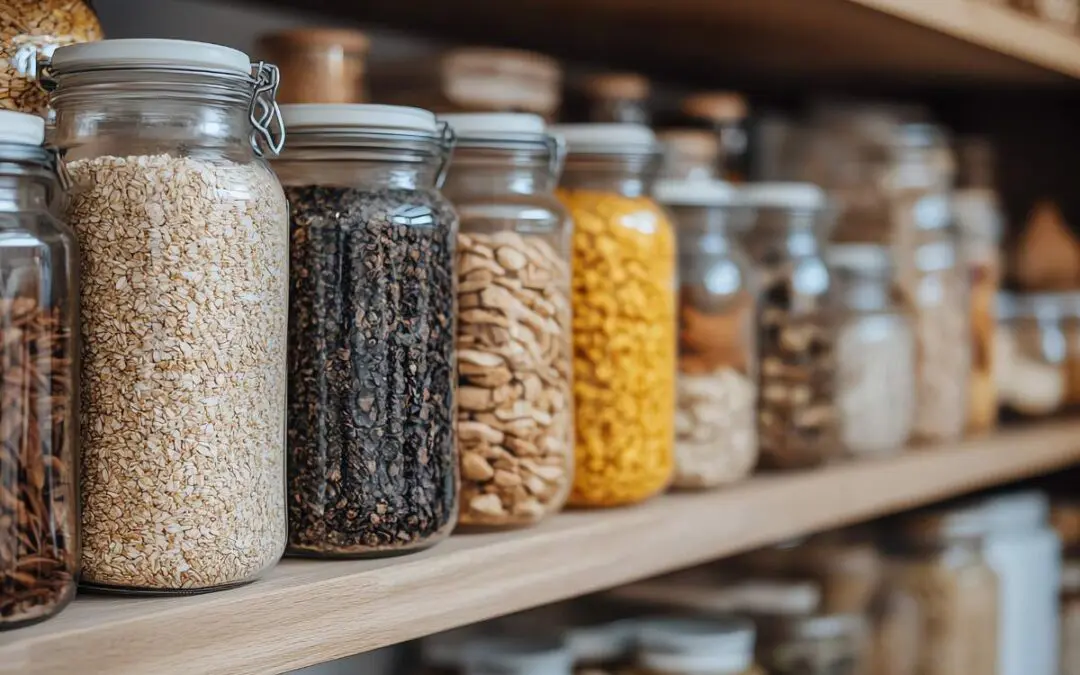
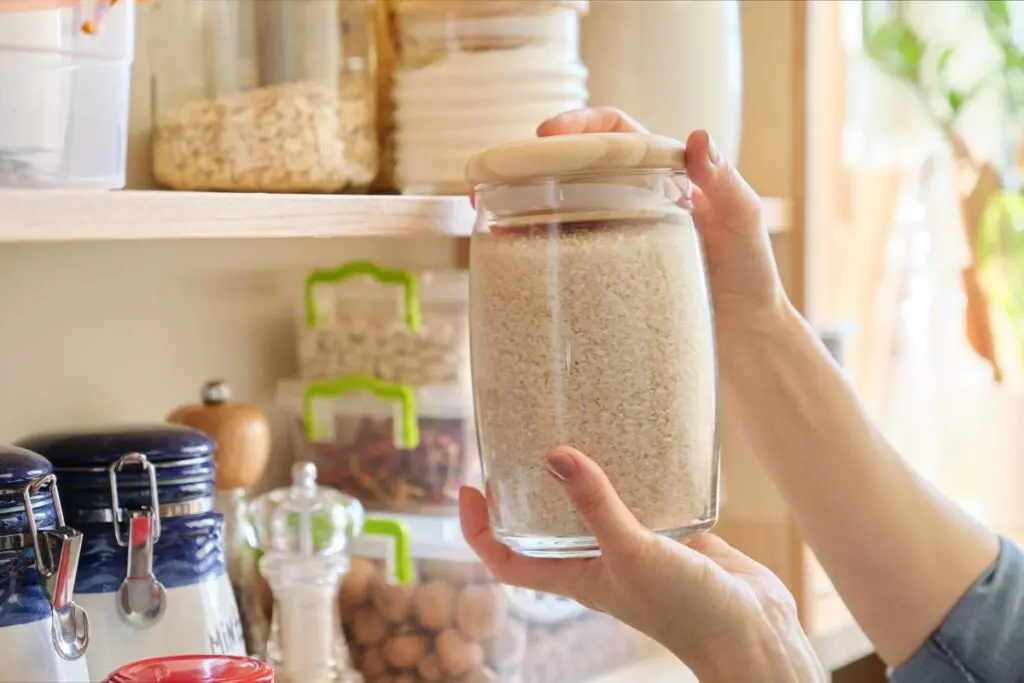
Skip the flimsy plastic bags from the grocery store and use airtight, long-term storage containers. Transfer everything into sealed, durable containers. Mason jars are useful for smaller quantities of nuts, seeds, grains, or spices. Mylar bags with oxygen absorbers are ideal for long-term bulk storage. Lastly, 5-gallon food-grade buckets with gamma lids are stackable and great for large quantities of rice, oats, or beans.
Next, you need to block light exposure to preserve nutrients:
- Store in dark-colored or opaque bins.
- Keep jars and bags in cabinets, closets, or containers with lids.
- If using shelves, cover jars with cloth or blackout panels.
With a strong system in place, you need to make sure it helps you use what you store, not forget it. Label every container with: item, purchase date, and target “use by” date. Use the first-in-first-out system by stacking the oldest items in the front and the newest in the back. To prevent tipping or crushing, store heavy items low and lighter items high.
Building your Core Food Reserves
A common excuse not to start is that it’s too expensive. The key is choosing staples that have a long shelf life, high nutrient value, and daily usability. You can keep your costs down even more by shopping at ethnic grocery stores, dollar stores, and local sales– prioritizing ingredient quality over branding. Here’s how to start:
- ??White rice: Inexpensive, calorie-dense, and lasts up to 30 years when stored correctly. Pairs with anything.
- Rolled oats: Great for breakfast, baking, or thickening soups. Easy to portion and rotate.
- Lentils and dry beans: High in protein and fiber; combine well with grains for complete proteins.
- Pasta: Versatile, fast-cooking, and kid-friendly. Easy to dress up with pantry sauces or protein.
- Peanut butter or other nut butters: Zero-cook source of healthy fats, protein, and flavor. Long shelf life.
- Canned tuna, sardines, salmon, or chicken: Real protein with omega-3s and shelf-stable convenience. Use in sandwiches, salads, or pasta.
- Powdered milk, UHT cartons, or ghee: Useful in baking, cooking, or coffee. Nutrient-dense backup when fresh dairy runs out.
- Canned tomatoes: The base for sauces, soups, stews, and curries. Boosts both flavor and nutrition.
- Dried fruit (raisins, dates, apricots): Adds natural sweetness, texture, and quick energy. Long-lasting in sealed jars.
- Nuts and seeds: High-calorie, micronutrient-rich, and easy to snack on or toss into meals.
- Shelf-stable oils (olive, coconut): Critical for cooking, dressing, and fat-soluble vitamin absorption.
- Vinegar, salt, sugar, and spices: Essential for flavor, food preservation, and digestion. Think hot sauce, garlic powder, and bouillon cubes.
- Honey or molasses: Natural sweeteners that never expire. Useful in baking, sauces, or stirred into oats.
The point here isn’t to create a bunker pantry of weird novelty foods. You’re looking to stock ingredients you’ll actually use, enjoy, and benefit from. When your reserve foods double as everyday foods, you’re more likely to rotate them consistently, reduce waste, and stay nutritionally grounded even in lean times.

Supplements to Cover Nutrient Gaps
Even with the best planning, food storage leans heavily on dry goods and shelf-stable basics. That means your intake might skew toward carbohydrates and shelf-friendly proteins, with fewer fresh fruits and vegetables over time. This is where strategic supplementation bridges the gap. Supplements also win on space efficiency. A single bottle takes up less room than a bag of lentils and is a consistent, high-leverage way to support your body through stress, limited diet variety, or high-demand days.
This is what you’re likely missing and how to fix it:
- Trace minerals from fresh greens and whole foods support enzyme function, hydration, and metabolic balance: Irish Moss delivers a dense spectrum of bioavailable minerals to maintain cellular health when fresh produce is scarce.
- Immune support from fruits, vegetables, and dietary variety helps regulate inflammation, detox pathways, and overall resilience: Immuni-Qi provides a concentrated blend of immune-modulating and detoxifying compounds to reinforce defenses when dietary inputs are limited.
- Mood-regulating compounds and antioxidants from colorful foods reduce oxidative stress and support brain function under pressure: CHOQ Lit offers a functional cacao blend with mood-boosting nutrients and antioxidants to combat food fatigue and emotional drag.
From Storage to Strength
Building a long-term food reserve only needs a weekend, a plan, and a little creativity with the space and budget you already have. In return, you get fewer grocery emergencies, better peace of mind, and the confidence that you’re prepared for whatever’s next. With a few bins, some smart staples, and the right support (supplements included), your kitchen becomes a quiet form of power. No panic. No waste. Just a system that works for you.