

Screens are everywhere. Our information, our entertainment, and even many of our social interactions are mediated by these glowing LED light panels. Blue light from devices significantly affects our ability to produce melatonin and get the deep regenerative sleep we crave and need.
Your nervous system craves a break from the dopamine hits and blue light overwhelm, and a nightly reset isn’t found in an app or a drug: it’s already above you. Backyard stargazing doesn’t require a telescope, constellation knowledge, or even a perfect view. It asks only that you stop, look up, and let the beauty around you soak in.
The Wind-Down Your Brain Actually Needs
Stargazing works because it cuts through literal and mental noise. The night sky offers vast, silent neutrality that signals your nervous system to stand down. The reason this works so well? Your biology is meant to ride the ebb and flow of natural light cycles, not TikTok scrolls. The environmental cues of stargazing naturally support melatonin production, which is essential for sleep and cellular repair:
- Exposure to darkness after sunset helps reset your circadian rhythm.
- Ambient stillness reduces cortisol levels, particularly if paired with deep breathing or light stretching.
- 10-15 minutes of low-stimulation time before bed improves both sleep onset and depth.
This is particularly important because stress depletes your mental, emotional, and physical reserves. By engaging in stargazing naturally, you downshift your nervous system and tap into a slower rhythm that your body craves. If the goal is serious nervous system repair, you can aid replenishment with ashwagandha, which is a clinically studied extract that supports healthy cortisol levels, promotes calm, and helps maintain resilience under pressure.
The social media hustle culture mythology tells us we should be grinding 24-7 and always doing more, but this is not the case. In reality, the brain can’t solve more complex problems when it’s overstimulated. Contrary to hustle culture’s favorite mantras, silence lets your brain switch into rest and recovery mode. This calm, contemplative silence allows for reflection, creativity, and big-picture insight. Even just ten minutes of looking up at the sky can soothe your mind into a reset point that allows you to think clearly instead of simply being reactive.
Most importantly, humans are wired to respond to scale. When you see something vast like mountains, oceans, or skies, your brain resets, shifting away from the internal monopoly and towards the external world. In this way, stargazing is somatic and induces a sense of awe. Awe is one of the more underutilized emotional tools in daily life. According to psychological research, awe:
- Decreases activity in the default self-processing regions of the brain;
- Increases openness and curiosity;
- Enhances feelings of connection to others and to the world at large.
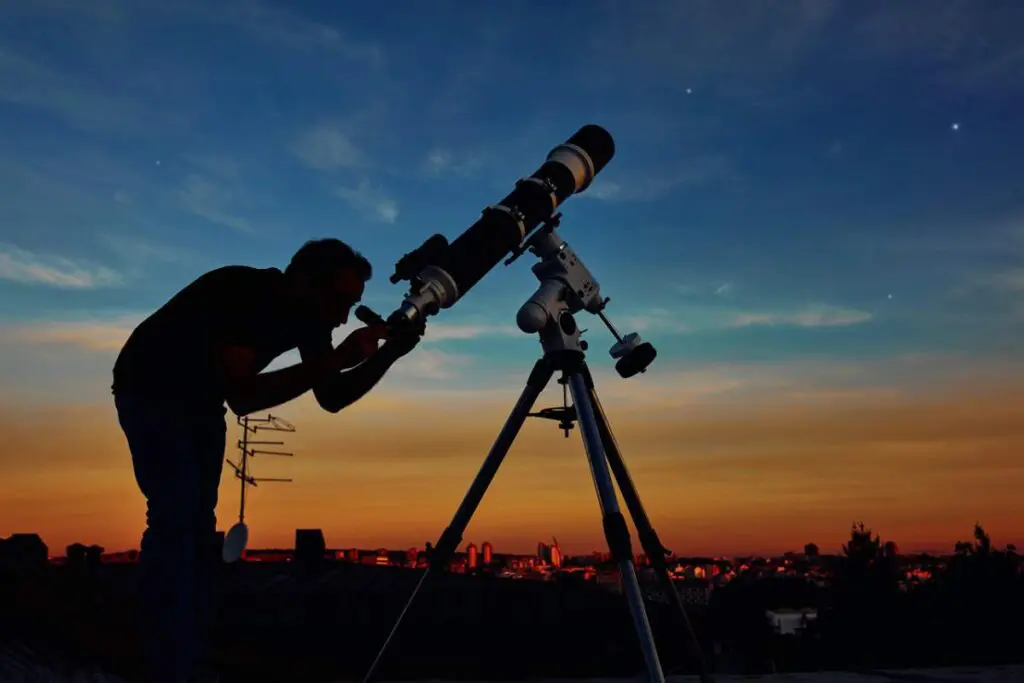
Create Your Stargazing Setup
Stargazing is easy. In fact, if it’s complicated, you’re doing it wrong. Your goal is to make quiet, awe, and stillness part of your evening rhythm. All you need is:
- A spot where you can sit or lie down, like a lawn chair, yoga mat, blanket, or porch step.
- A view of the sky that feels open enough, including a small patch through city lights.
- Lights off or turned low, limiting yourself to red or amber light if you need visibility without disrupting your night vision.
- Quiet surroundings, meaning no music, no headphones, and no scrolling.
If you want to elevate the experience even more, make sure that your additions are selected to enhance, not clutter, the physical and mental space you are curating. Herbal tea that helps the body wind down, like chamomile, lemon balm, or holy basil, can set the tone and relax your body. A nice, subtle scent like lavender or cedar deepens the sensory atmosphere to anchor you in place. For an extra special night, stargaze with your partner after enjoying fine dining at home, which is one of the easiest, most fun date night ideas at home.
If you live in a city or suburban area with heavy light pollution, you might think stargazing is off the table. The urban sky offers less visibility but more intimacy if you know what to look for. Start by anchoring to the most reliable, cyclical, and visible objects in the sky:
- Moon: Its phases are easy to track from anywhere. Watch how the light changes the landscape, how it rises at different times, and how shadows shift.
- Bright planets: Venus, Jupiter, and sometimes Mars are often visible even through haze and city glow. Apps like Sky Guide or Heavens Above can show you where and when to look.
- Constellations: Pick one to learn each week. Trace it with your finger and name its stars out loud, seeing how its position shifts night to night. This builds recognition and meaning in ways random sky-scanning never will.
To get the most out of urban stargazing, a few small habits can turn limited visibility into a meaningful ritual. Start by keeping a simple sky journal to note what you see. Over time, you’ll start to notice patterns in how stars show up seasonally, how the moon alters mood and lighting, and how your own attention shifts. Elevation helps too: rooftops, balconies, or even top floors of parking structures can lift you above the worst of the city glare. Set up shop at civil twilight, which is just before dawn or right after sunset, to make the most of a short but vivid window when the sky is visible but the city hasn’t fully lit up.

How To Make It A Habit
A one-off stargazing night is nice, but if you want all the benefits, you need to make it a habit. Reframe stargazing as a ritual that invites you to slow down and connect. All you need is some reliable anchors to tie this ritual to. For example, stepping outside for five minutes after brushing your teeth, or enhancing your bedtime tea routine with this.
Keep in mind that resistance is part of the process. Sometimes you’ll want to stay insightful, finish one more episode, or doomscroll your way to bed. That’s normal, but these are the nights that need this ritual most. Remind yourself that stargazing is a gift that offers you a kind of silence that teaches you to listen again.
End the Day Looking Up
No telescope. No apps. No pressure. Just you and a few minutes of silence under the sky. It costs nothing and gives you more than most nighttime “routines” ever could. If your goal is recovery, clarity, or just not going to bed wired every night, start with backyard stargazing.