
Today, getting stronger no longer requires a crowded gym, complicated machines, or the confidence level of someone who owns lifting chalk. A clear patch of floor, a pair of dumbbells (or even just your bodyweight), and a simple plan are more than enough.
Below, you’ll find a beginner-friendly routine designed to fit into your life without taking it over. Each move is simple, effective, and adaptable, with clear steps and explanations so you can start safely, feel confident, and know exactly what each exercise does for your body.
Strength Without the Gymtimidation
Beginner strength training at home has a hidden advantage: it removes the performance aspect. No mirrors, no waiting for equipment, no wondering if you’re “doing it right” in front of strangers. This kind of strength training for women and men allows you to move at your own pace, focus on form, and build real, usable strength in a way that fits your actual life, which is exactly how consistency is born.
A few tips before you begin:
Make Your First Goal “Showing Up,” Not “Getting Stronger”
Strength is a side effect of consistency. In the first few weeks, along with natural pre-workout practices, the real win is completing sessions even if you only manage one circuit. Think of it as building a habit foundation: muscle follows momentum.
Slow Down Your Reps On Purpose
Controlled, deliberate movement recruits more muscle fibers than rushing through sets. Beginners often overestimate how much weight they need; slowing down lets your muscles do the work without extra strain.
Stop Each Set Feeling Like You Could Do Two More Reps
Leaving a rep or two “in the tank” keeps strength gains safe and sustainable. Overreaching early can leave you sore, discouraged, or skipping workouts. Consistency wins over intensity at the start.
Your Rest Time Is Part Of The Workout
Thirty to sixty seconds between sets allows muscles to recover enough to perform the next set properly. Short rests can even improve focus, reduce fatigue, and make the session feel less daunting.
Rotate Effort, Not Exercises
You don’t need endless new moves to progress. Gradually improving technique, range of motion, or adding reps in the same routine is more effective than constantly swapping exercises. Mastery beats novelty in beginner strength.
Create A “Default Weight”
Keep a pair of dumbbells or household alternatives (water bottles, cans) in a visible, easy-to-reach spot. Convenience often beats motivation; if it’s right there, you’ll be more likely to use it.
Treat Form Like Your Main Strength Exercise
Proper posture and alignment aren’t just “nice to have”. They train your nervous system, improving muscle activation and movement patterns. Form-first practice builds strength efficiently and prevents habits that could slow progress later.
Pair Your Workout With A Cue Or Mini Ritual
Whether it’s a 30-second stretch, listening to a favorite playlist, or hydrating from your favorite water bottle beforehand, a small ritual signals your brain that it’s time to move. Consistent cues make workouts automatic over time.
Track Tiny Wins
Note if you can do one extra rep, hold a plank a few seconds longer, or lift slightly heavier. Seeing incremental progress reinforces the habit and keeps motivation alive.
Celebrate The “Non-Scale” Benefits
Strength training improves energy, confidence, posture, and everyday function, not just how you look. Recognizing these wins makes the routine meaningful beyond the mirror. This is especially beneficial to men and women over 40 as many people in this stage of life start paying closer attention to maintaining strength, mobility, and ease in daily movement.
Start Here: Your At-Home Strength Routine
This beginner strength training routine is designed to remove decision fatigue: the same foundational moves, a logical order, and just enough structure to help you feel successful from day one. You’ll train your major muscle groups, practice good movement patterns, and finish feeling worked without being wiped out.
How Often to Do It
Perform this routine 2–3 times per week, with a rest day in between sessions to allow your muscles to recover and adapt.
What You Need
- Your body weight
- A pair of light to moderate dumbbells (or water bottles if you’re improvising)
- A sturdy chair, bench, or low table
- A small, clear workout space
Warm-Up (3–5 minutes)
Think of this as your body’s “log-in screen” before the real work begins.
- Arm circles: 30 seconds forward, 30 seconds backward
Gently wakes up the shoulders and improves joint mobility.
- Hip hinges: 60 seconds
Hands on hips, push them back and stand tall. This teaches the movement pattern for squats and deadlifts.
- March in place: 60 seconds
Gradually raises your heart rate and boosts circulation.
- Torso rotations: 60 seconds
Loosens the spine and reduces stiffness from sitting.
The Beginner Strength Circuit
- Perform each exercise for 8–12 controlled reps.
- Rest 30–60 seconds between exercises.
- Complete 2–3 rounds of the full circuit.
1. Chair Squats
This builds foundational lower-body strength and reinforces safe, everyday movements like sitting and standing. It trains the legs, glutes, and core.
How to do it:
- Stand in front of a chair with feet hip-width apart.
- Push your hips back and bend your knees to sit down slowly.
- Lightly touch the chair, then stand back up by pressing through your heels.
2. Wall or Incline Push-Ups
Trains the chest, shoulders, arms, and core. Beginner insight: the higher your hands, the easier the movement. Adjust the angle to match your strength.
How to do it:
- Place your hands on a wall, counter, or chair.
- Step your feet back so your body forms a straight line.
- Lower your chest toward your hands, then push back up.
3. Dumbbell (or Bodyweight) Romanian Deadlifts
Works out the glutes, hamstrings, and lower back. This teaches proper lifting mechanics and strengthens the entire back of your body, which is the “posture chain.”
How to do it:
- Hold weights in front of your thighs.
- Hinge at the hips, lowering the weights along your legs.
- Stop when you feel a stretch in your hamstrings, then stand tall.
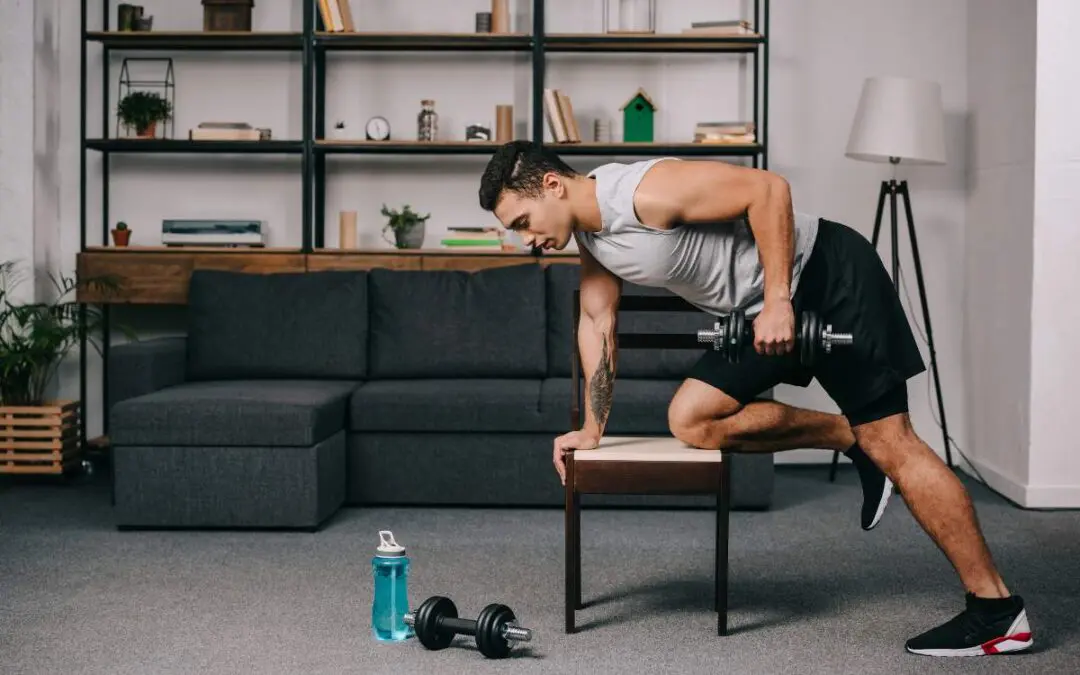
4. One-Arm Dumbbell Rows
Trains the upper back, arms, and grip. Pro tip: Imagine squeezing a pencil between your shoulder blades at the top.
How to do it:
- Place one hand on a chair for support.
- Hold a weight in the opposite hand.
- Pull the weight toward your ribcage, then lower with control.
5. Glute Bridges
Beginners love this because it’s low-impact, highly effective, and great for counteracting long hours of sitting while working out the glutes, hamstrings, and core.
How to do it:
- Lie on your back with knees bent and feet flat.
- Press through your heels and lift your hips.
- Pause at the top, then lower slowly.
6. Standing Shoulder Press
Focuses on the shoulders, arms, and core. Form focus: keep your ribs down and core engaged to avoid arching your back.
How to do it:
- Hold dumbbells at shoulder height.
- Press them overhead.
- Lower slowly with control.
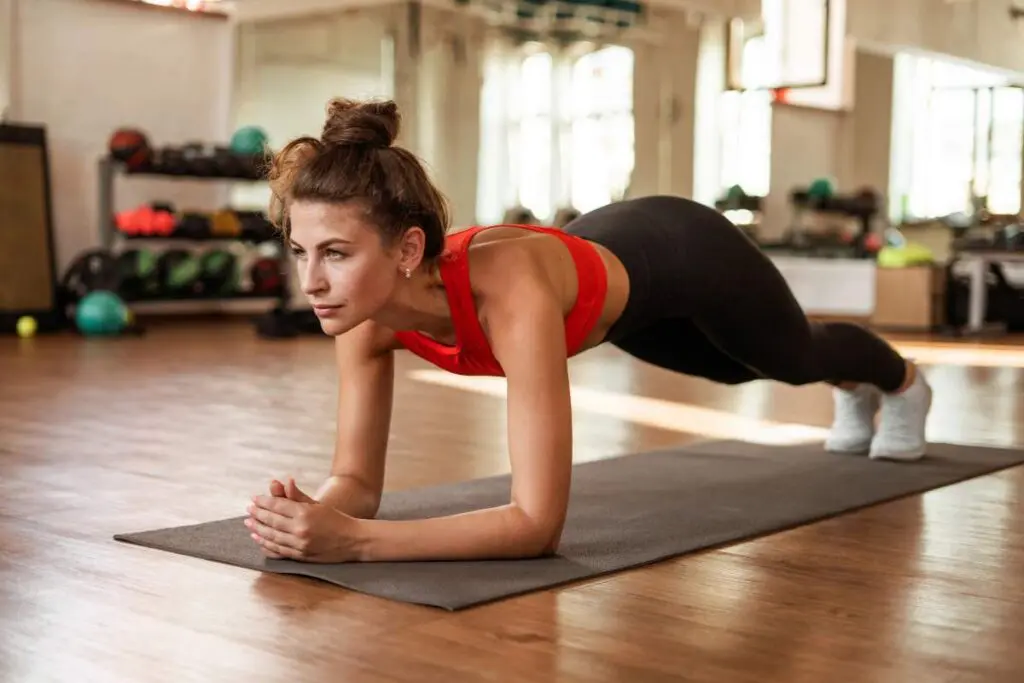
7. Front Plank (15–30 seconds)
Works the core and shoulders, and helps improve stability. In the beginning, perform it on an incline if the floor feels too challenging.
How to do it:
- Place forearms on the floor or a raised surface.
- Step your feet back into a straight line.
- Hold while breathing steadily.
Cooldown (2–3 minutes)
This helps your body shift out of workout mode and reduces next-day stiffness.
- Gentle forward fold
- Chest-opening stretch
- Slow breathing
Stronger at Home, Stronger for Life
Strength comes from a repeatable plan and the willingness to begin. Stay consistent, respect good form, and your at-home beginner strength training routine will quietly turn into real, visible strength that carries into everything else you do.