
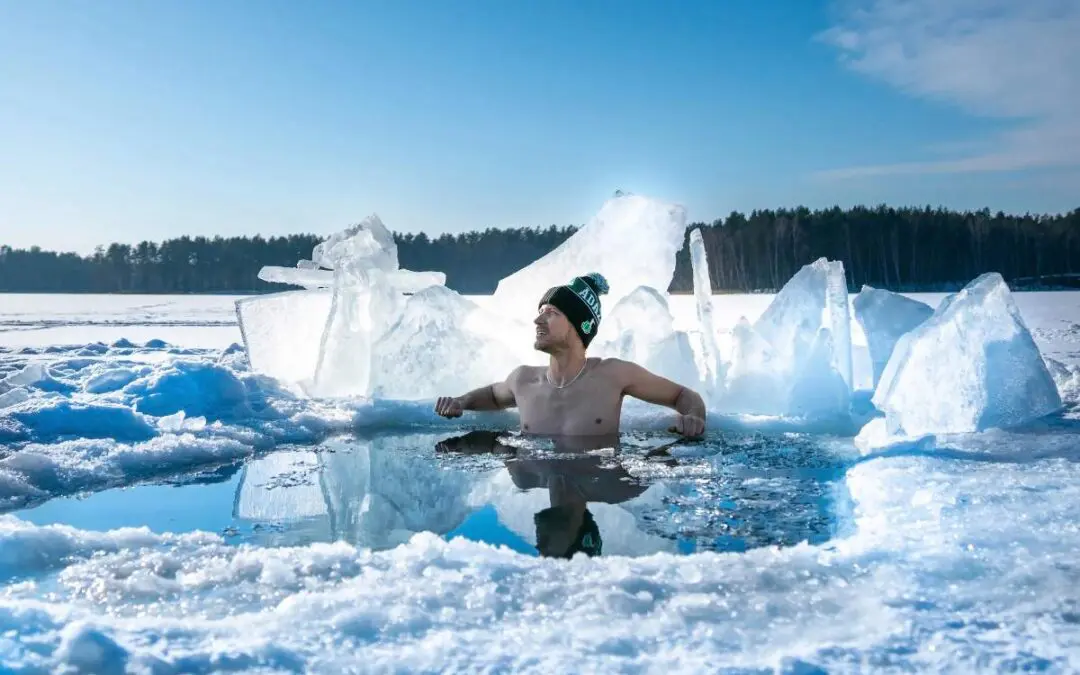
In all honesty, the idea of voluntarily stepping into freezing water sounds less like “wellness” and more like a bad decision at a ski lodge. Cold showers? Icy plunges? Ice baths before sunrise? For most of modern history, we’ve done everything possible to avoid the cold; from central heating and thermal socks to heated car seats that feel like a warm hug, embracing the cold has not been a priority. And yet, here we are, circling back to cold exposure like it’s a newly discovered secret.
But here’s the twist: cold exposure isn’t new, and it isn’t the enemy. It’s an ancient practice that can bring vitality and resilience. Long before wellness influencers and recovery studios, entire cultures were intentionally exposing themselves to cold as part of daily life, ritual, and resilience. Today’s fascination with cold exposure and stress relief isn’t about reinventing the wheel, but about rediscovering what humans once understood intuitively.
Let’s do a cultural deep dive into how old-world practices shaped our relationship with the cold, and why modern wellness is finally paying attention.
What Cold Exposure Really Is
Let’s strip away the hype: cold exposure simply means intentionally exposing your body to cold — through cold showers, ice baths, winter swims, or dips in icy lakes — in a controlled way you can handle.
It’s about nudging your body’s stress systems in tiny, manageable doses so they adapt and respond more flexibly over time. Modern science calls this hormesis, a beneficial response to mild stress that can help your body handle bigger stressors more gracefully. The following are some of the most common cold exposure benefits when done safely and gradually:
- Stress response training: Brief cold triggers nervous system activation that can leave you feeling more alert and awake.
- Circulation and recovery support: Constricting blood vessels in cold and then warming back up again may support circulation and reduce muscle soreness after exercise.
- Short-term stress relief: A 2025 study suggests that people’s stress levels drop and sleep quality improves after cold-water immersion, making cold exposure an effective quick stress management tool.
- Metabolic activation: Exposure to cold prompts the body to work harder to maintain its core temperature, which can trigger an increase in metabolism.
- Mood and alertness boosts: Cold exposure can trigger neurotransmitters like dopamine and norepinephrine, which help improve mood and focus, though effects are usually short-lived and vary by individual.
Cold Exposure Around the World
If you think cold showers are novel, you’re late to the party. For thousands of years, cultures across the globe have relied on cold, not as punishment, but as tradition, ritual, and even community glue.
The practical experience of shock, breath focus, and then relief has been woven into human life from icy lakes to sacred waterfalls. Below are real cultural practices, their local meanings, and the benefits people traditionally associate with them.
Nordic Countries (Finland, Sweden, Norway)
If cold exposure had a hometown, it would probably be somewhere in Finland, and there would be a sauna involved. In Nordic countries, cold exposure is a normal part of daily life, where people move directly from intense sauna heat into icy lakes, snow, or ice holes known as avanto or vinterbad.
It’s social, seasonal, and deeply ordinary; a part of community life rather than an act of wellness. Traditionally, the hot-cold contrast is valued for supporting healthy circulation, post-sauna refreshment, metabolic activation, and building long-term resilience to cold, all while catching up with friends.
And if you’re thinking this sounds intense, just wait until you hear what Eastern Europe does with snow.
Russia & Eastern Europe
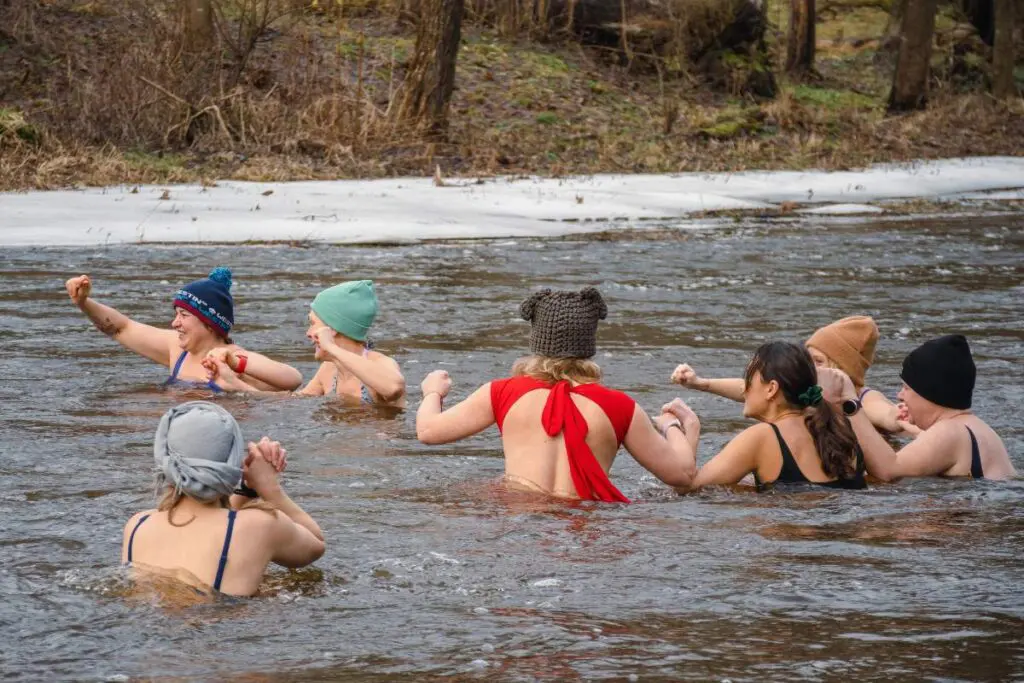
In Russia and Eastern Europe, cold exposure follows the steamy embrace of the banya, a traditional Russian bathhouse that functions as a steam bath. After prolonged heat, people plunge into icy water, roll in snow, or swim outdoors in winter conditions.
In some Orthodox Christian traditions, cold-water immersion during Epiphany carries spiritual significance tied to purification and renewal. Beyond faith, these rituals evolved alongside long, harsh winters and are traditionally associated with stress relief, support for circulation, metabolic stimulation, and the unmistakable feeling of being very, very awake.
Turkey & the Middle East (Hammam Culture)
Similar in practice, cold exposure follows prolonged heat and steam rather than standing alone in traditional hammam culture. Bathers move through warm, hot, and cooler spaces, often ending with a cold rinse or plunge. This contrast has long been valued for circulatory system support, skin refreshment, relaxation, and that unmistakable post-bath glow, which is the ancient equivalent of feeling “reset.”
Indigenous Arctic & Northern Peoples (Inuit, Sámi, Yakut)
For Indigenous Arctic and northern peoples, cold exposure isn’t a wellness trend but survival. Seasonal immersion in cold water, snow contact, and exposure to extreme temperatures developed alongside practical skills like controlled breathing and movement.
These traditions emphasize adaptation, physical resilience, metabolic efficiency, and respect for the environment, rather than intentional stress for stress’s sake.
Ancient Greece & Rome
Ancient civilizations, surprisingly, were also on board, minus the ice holes. Cold exposure played a role in ancient Greek and Roman wellness long before modern recovery science existed. Cold baths were commonly used in public bathhouses and athletic training settings, often after physical exertion.
Philosophers and physicians believed cold water helped balance the body and mind, while athletes used it to support muscle recovery, circulation, and restoration after competition.
Korea (Jjimjilbang)
Korea, of course, turns the whole thing into a social event. Korean jjimjilbang bathhouses combine saunas, heated rooms, cold plunge pools, and cold chambers, all designed for movement between temperatures.
Cold exposure here is communal, casual, and restorative. Traditionally, it’s associated with refreshment, circulation, stress relief, and sustained energy, not endurance challenges or performance metrics.
Japan
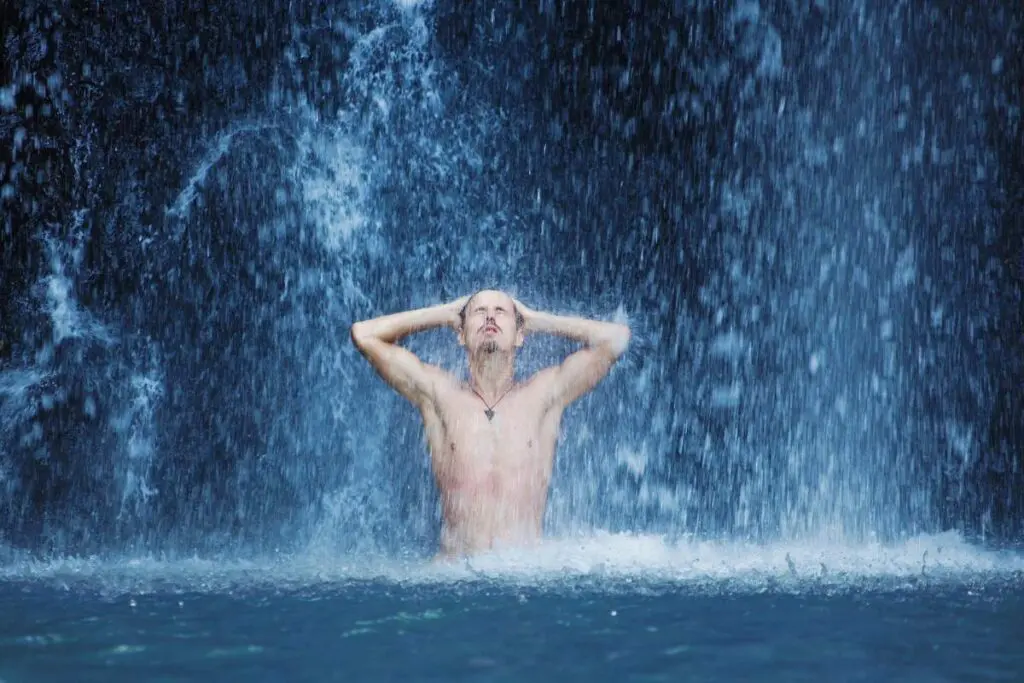
Japan, meanwhile, takes a quieter (and arguably more poetic) approach to cold. Here, cold exposure is about refinement, not shock value. Hot springs called onsen and sento often include optional cold plunges, while Shinto misogi rituals involve standing beneath cold waterfalls.
The intention isn’t endurance or bravado, but clarity. Cold exposure here is traditionally used to support physical cleansing, mental focus, circulation, and a holistic sense of renewal that blends body, breath, and awareness.
China (Traditional Chinese Medicine & Temperature Balance)
China approaches cold with a little more philosophy and a lot more balance. In traditional Chinese wellness systems, cold exposure is approached thoughtfully through the lens of balance. Temperature contrast is used seasonally or within bathhouse settings to harmonize yin and yang rather than push extremes. Cold is considered powerful but contextual, with traditional benefits centered on circulation, internal balance, and maintaining metabolic harmony.
Finally, there’s the cold exposure you don’t schedule; it schedules you.
Scotland & Ireland (Winter Sea Swimming)
Along the coasts of Scotland and Ireland, winter sea swimming has long been shaped by geography and community rather than wellness trends. Cold-water swims often happen in groups, turning discomfort into camaraderie. Historically and today, these swims are associated with refreshment, resilience, stress relief, and the quiet satisfaction of doing something difficult together, preferably followed by tea.
Before You Try Cold Exposure: A Few Smart Safety Reminders
Cold exposure can be invigorating, but it’s still a physical stressor, not something to rush into or power through. Approaching it with patience, awareness, and common sense helps keep the experience productive rather than unpleasant (or risky).
- Start mild: Begin with cool water or short exposures before attempting colder temperatures or longer durations.
- Limit time: More isn’t better. Brief sessions are common in traditional practices and modern use alike.
- Control your breathing: Slow, steady breathing helps manage the initial shock and keeps the nervous system from spiraling.
- Warm up naturally afterward: Let your body reheat gradually through movement or warm clothing instead of jumping straight into intense heat.
- Listen to your body: Numbness, dizziness, or confusion are signs to stop immediately.
- Skip cold exposure if you have certain conditions: People with heart, circulatory, or respiratory issues, or those who are pregnant, should consult a healthcare professional first.
- Never force it: Cold exposure is optional. The goal is awareness and resilience, not suffering.
Cold as a Teacher, Not a Test
Across cultures and centuries, cold exposure was never about proving toughness or chasing extremes. It was about learning how to breathe through discomfort, recover from stress, and work with the environment rather than fight it. From saunas and bathhouses to icy seas and mountain rivers, cold was used thoughtfully, often briefly, and always with respect. These traditions also shared a connection to the natural world, much like practices such as earthing that encourage spending intentional time outdoors.
Modern wellness is just beginning to rediscover this idea. When approached gradually and safely, it can offer a moment of clarity, a pause from constant comfort, and a simple reminder that growth often comes from meeting small challenges with intention rather than intensity.
Disclaimer: These statements have not been evaluated by the Food and Drug Administration. The contents of this article, made available via Choq, are for informational purposes only and do not constitute medical advice. The content presented here is not intended to be a substitute for professional medical advice, diagnosis or treatment. Always seek the advice of a qualified healthcare provider with any questions you may have regarding a medical condition or dietary changes. Reliance on any information provided by this article is solely at your own risk.