
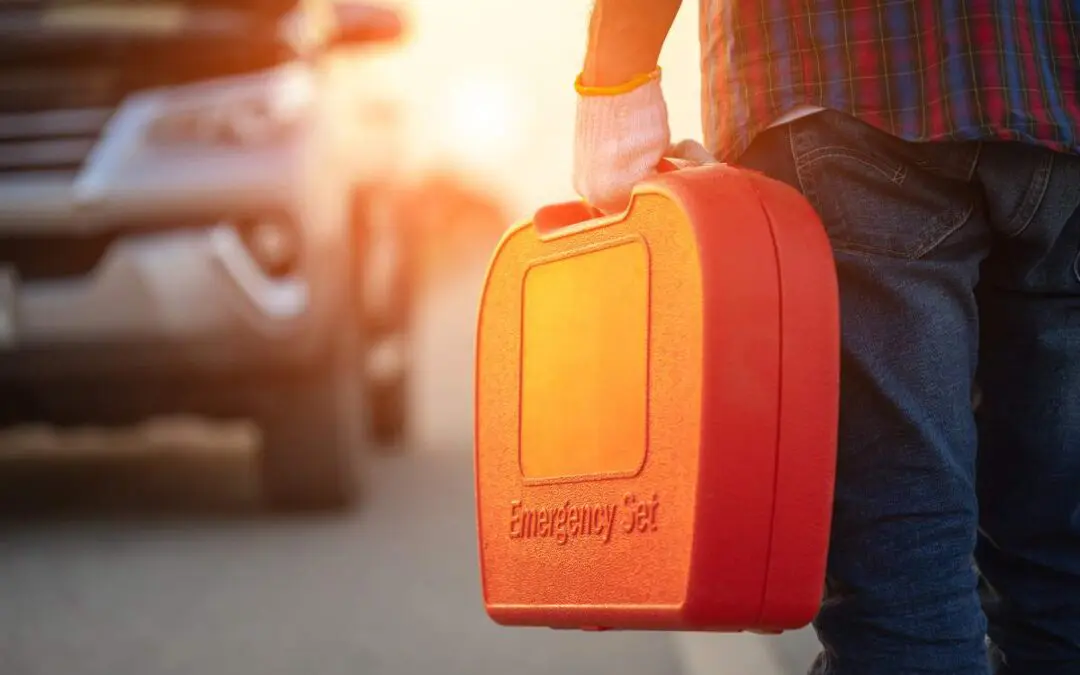
Your phone dies on a back road. No signal. No charger. Most of us don’t think about our car emergency kit until we wish we had one. The modern driver faces more than just flat tires so you need a better personal system for peace of mind. Your car is a mobile command center when things go sideways. Read on for the best tips to build a streamlined, real-life emergency kit based on you, your routines, and your wellness.
Seven Smart Categories to Ditch the Junk
Emergency kits too often fall into two categories: overstuffed chaos or underprepared wishful thinking. The smart middle ground is a clear system built around function. Instead of throwing random gear in a trunk bin, you can organize your kit by purpose.
Safety and Visibility
The first priority in a roadside emergency is making yourself seen and safe, particularly at night or during bad weather. A high-lumen LED flashlight or headlamp with extra batteries on hand helps you to see your surroundings better, while a reflective warning triangle and high-visibility vest ensure that you’re seen by any other drivers. For worst case scenarios, include a compact window breaker and seatbelt cutter combo tool.
Power and Communication
A dead phone is a vulnerability. If you’re stranded, your ability to call for help or check maps depends on power. Pack a high-capacity battery bank (20,000mAh or more) with USB-C and Lightning ports for cross-device compatibility. A multi-port car charger helps you stay powered up while driving. Particularly if you’ll be in areas with poor reception, a hand-crank or solar-powered NOAA weather radio provides critical updates.
First Aid and Wellness
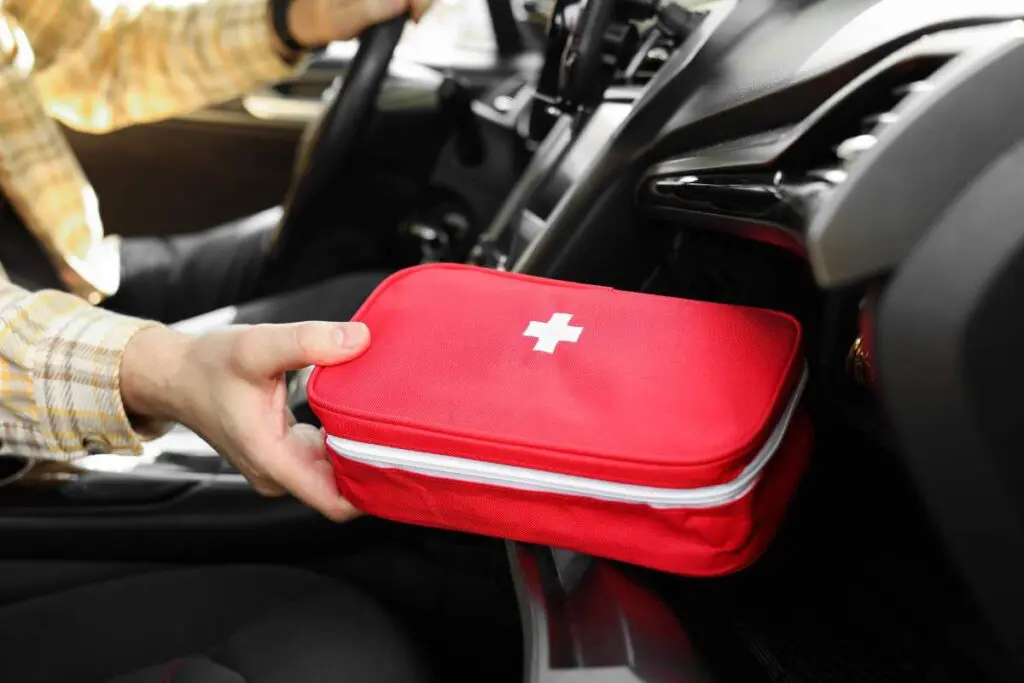
The best first-aid kit is one that you can actually use. Skip the 200-piece novelty kits and focus on real needs. A slimmed-down kit with antiseptics, trauma shears, pain killers, and allergy meds covers the essentials. Also include electrolyte packets to prevent dehydration and a clean caffeine source to stay alert when it counts. To stay sharp under pressure, support your body with Tongkat 100, a clinically studied adaptogen that helps regulate cortisol, sustain energy, and maintain mental clarity in high-stress moments.
Food and Hydration
Ditch the sugary snacks and empty calories in favor of high-density, shelf-stable fuel that keeps you sharp. Foods like beef jerky, RXBars, and nutpacks provide fuel that keeps you alert and steady. Pair this with collapsible water bottles and purification tablets or a LifeStraw so you’re never stuck without clean water. As well, natural adaptogens like shilajit add a boost to help your body recover from extended waits or physical stress.
Warmth and Shelter
Even in milder climates, losing heat during a roadside emergency can get dangerous. Hypothermia can start in temperatures as high as 50°F if you’re wet or exposed. Mylar blankets reflect body heat and fold small, while a lightweight bivy sack or emergency sleeping bag provides an additional layer of protection. Stash an extra pair of socks, gloves, and a hat in a sealed bag so you’re not caught unprepared.
Mobility and Repairs
You need essential gear to get rolling or stabilize a problem until help arrives. Prioritize tools that cover multiple scenarios in a compact setup: jumper cables or a lithium jump starter like the NOCO Boost Plus, a tire repair kit with a mini inflator or Fix-a-Flat, and a multitool. Add duct tape and zip ties to handle quick fixes without mechanical skills.
Information and Backup Documents
Digital tools are great until your phone dies, breaks, or loses signals. You need physical copies of your ID, insurance and registration in a waterproof sleeve. Include small bills in cash, a pen, a notepad, and printed emergency contacts and maps.
Personalize for Your Lifestyle
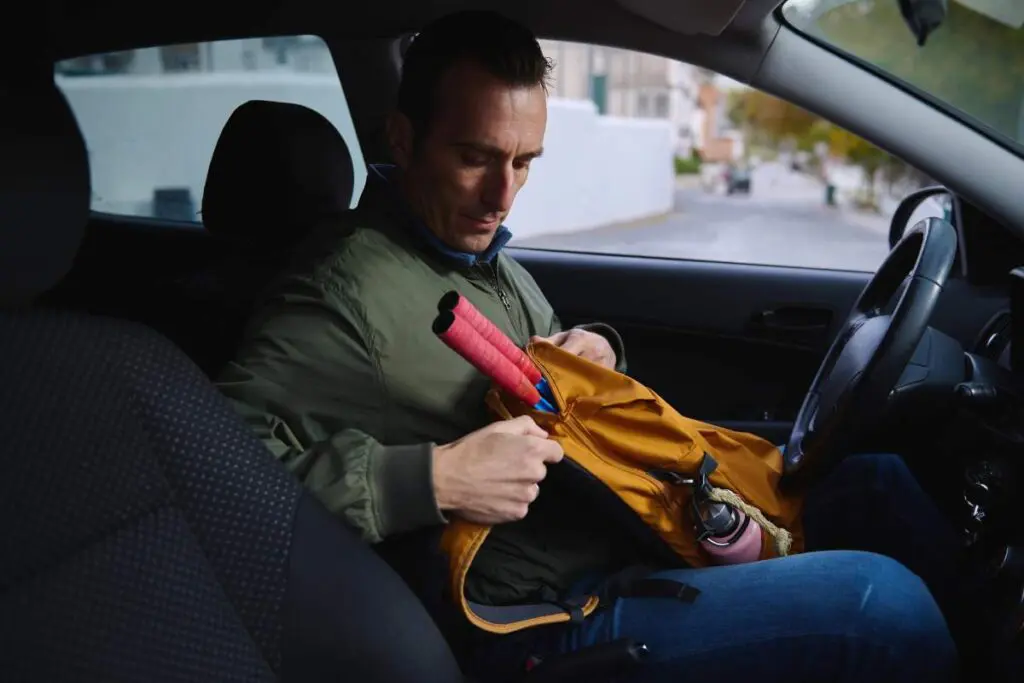
Once your core kit is in place, take a few minutes to think about your daily life. What specific extras would make a difference for you in a delay, breakdown, or detour. Customize your kit based on the your lifestyle, habits, and the people you regularly drive with:
- For parents: Extra shelf-stable snacks and water, diapers, wipes, baby painkillers or allergy meds, comfort items, and emergency contact cards for each child.
- For solo drivers or commuters: Pepper spray or a safety whistle (check local laws), backup charger, spare shoes, travel toothbrush, medical info lock screen or iPhone emergency contact setup, and a spare pair of prescription glasses or contacts.
- For adventurers: Lightweight camping gear like a tarp, a firestarter, or a multitool, and printed trailhead maps or GPS coordinates.
- For pet owners: Collapsible water bowl, extra leash, small bag of kibble or treats, waste bags, and a printed vet contact card.
- For ride-share or delivery drivers: Hand sanitizer, disposable gloves, a seat cover, extra phone mount or charger, printed delivery route backup, and emergency cash for tolls or fuel.
- For people with medical needs: Spare medication for at least 3 days, glucose tablets or EpiPen if needed, backup inhaler, and a printed list of conditions and emergency instructions.
Keep Your Kit Up-To-Date
Every three to six months, take ten minutes to review your kit. Take stock of what’s missing, what’s expired and what doesn’t reflect your current lifestyle. Swap out food, drink, and meds before they go bad. Recharge power banks and test flashlights. If you’ve changed vehicles, insurance, or ID, update your document copies. As the seasons shift, add weather-specific items depending on the season.
Even the best gear is useless if it’s buried under gym bags and grocery totes. Visibility and organization are everything:
- Use modular pouches or bins to separate categories (first aid, power, food).
- Keep critical items like flashlights or window breakers in the glovebox.
- Waterproof the things that matter, like meds, paper documents, and electronics.
- Label pouches or use clear bags to reduce guesswork.
The Road to Peace of Mind
Most emergencies aren’t cinematic. They’re mundane, mildly chaotic, and completely fixable. All you need is the right basics in the right place. A few intentional choices now can save you stress, time, and real risk later.