
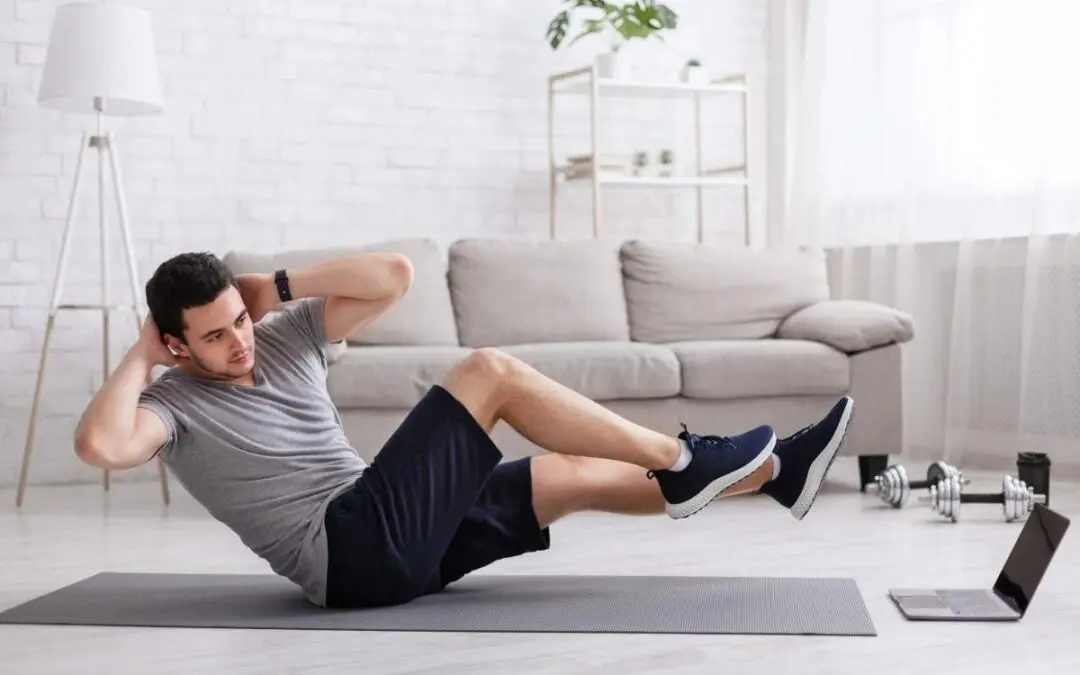
Life doesn’t arrange itself around your fitness goals. It stacks meetings on top of errands, sprinkles in unexpected responsibilities, and then dares you to find 30 uninterrupted minutes at the end of the day. Simple at-home workouts exist for this exact reality.
You don’t need a dedicated gym corner or a perfectly optimized routine. You need movement that fits where you already are, physically and mentally. A few minutes of intentional movement can wake up your circulation, shake off mental fog, and remind your body that it was designed for more than sitting and scrolling.
The at-home workouts below are designed for the in-between moments: the gap before dinner, the five minutes between meetings, the brief window when the house is finally quiet. No equipment, no need to reorganize your life; just practical movement that fits into days that are already full.
Easy Home Workouts For Beginners
These workouts keep your body engaged, your energy moving, and your stress from settling in your shoulders like it pays rent. Before you jump in, spend a minute doing a light pre-workout stretch. Reach your arms overhead, roll your shoulders, or do a gentle torso twist to warm up muscles and protect joints. Each option below is beginner-friendly, works in small spaces, and can be adjusted up or down depending on how your day is treating you.
As you build confidence and consistency, these simple movements can also give you a foundation for strength training for women, whether you eventually add resistance bands, dumbbells, or bodyweight exercises.
The 5-Minute Reset
This quick routine works well during a mid-morning energy dip, between tasks when your brain feels scattered, or on days when motivation is running low.
What you need: A small, clear patch of floor – no equipment, no setup time.
What it does: This short sequence gently boosts circulation, loosens stiff joints, and refreshes mental focus without leaving you sweaty or depleted.
How to do it:
- March in place for 60 seconds to wake up circulation in your legs and gently elevate your heart rate, signaling your body that it’s time to shift out of idle mode.
- Do wall or counter push-ups for 60 seconds to activate your chest, arms, and core while opening up the front of your body, which often tightens during long periods of sitting.
- Perform standing knee lifts for 60 seconds to engage your core muscles and encourage hip mobility, which helps counteract stiffness from staying seated too long.
- Roll your shoulders and add gentle torso twists for 60 seconds to release upper-body tension and restore natural movement to areas where stress commonly settles.
- Finish with 60 seconds of slow, steady breathing to help your nervous system downshift, bringing your body back into a calmer, more focused state.
This mini-session gets your blood moving without draining your energy, which helps break mental inertia and physical stiffness at the same time. Think of it like shaking a snow globe – once the motion settles, everything feels a little clearer and more manageable.
The 10-Minute Energizer
This routine is ideal for late morning, early afternoon, or whenever your energy feels flat, but you have a small window to move.
What you need: A small patch of floor and your body. No equipment or props required.
What it does: This sequence combines gentle strength and mobility movements to improve circulation, engage multiple muscle groups, and help shift your mindset from passive to active in just minutes. Simple bodyweight exercises like these support functional strength and cardiovascular engagement.
How to do it (repeat the circuit twice, then rest for 30 seconds before repeating):
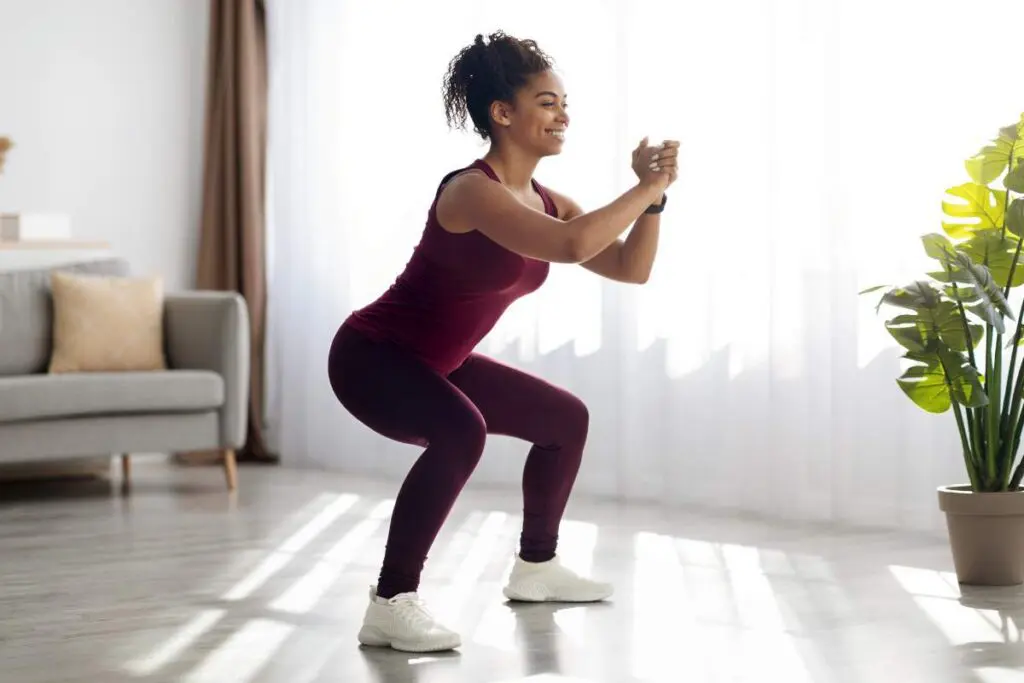
- Do bodyweight squats for 45 seconds by standing with feet hip-width apart, lowering your hips back and down as if sitting into a chair, and then rising with control. This movement wakes up the legs and glutes while encouraging upright posture.
- Perform arm circles or light shadowboxing for 45 seconds to boost shoulder mobility and increase blood flow through your upper body. These dynamic movements help “unlock” stiffness from desk posture.
- Do step-back lunges (or gentle alternating steps) for 45 seconds to engage your lower body and core, helping balance strength between legs while promoting hip flexibility.
- Stand tall and reach overhead for 45 seconds by lifting your arms up and slightly stretching your side body. This helps counteract chest-forward posture and lengthens tight muscles.
- Walk or march in place for 45 seconds at a comfortable pace to bring your heart rate up gently before your short rest between rounds.
This routine awakens circulation and movement without leaving you drained, helping you feel more present and ready for what’s next.
The 20-Minute Balance Builder
This routine is great for lunch breaks, after work, or on evenings when you want a structured session that’s still approachable.
What you need: A clear area of the floor. An exercise mat is optional but not essential.
What it does: By combining standing strength moves with mobility and breath coordination, this flow supports overall body engagement and helps release stress built up from long periods of sitting.
How to do it (complete three rounds, rest 45 seconds between each round):
- Stand and do chair squats for 60 seconds by lowering down as if to sit in an imaginary chair and rising with control. This targets lower-body muscles while improving hip and knee mobility.
- Perform incline push-ups against a wall or countertop for 60 seconds to focus on upper-body strength while minimizing wrist or shoulder strain.
Do standing hip hinges for 60 seconds by bending at the hips with a straight spine and feeling engagement in the back of your legs and glutes, which improves posterior chain activation. - March or do gentle step-ups for 60 seconds to engage your heart rate and add a rhythmic component that complements strength movements.
- Finish with a slow forward fold and deep breathing for 60 seconds by hinging at your hips, relaxing your neck, and taking a few deep, intentional breaths to calm your system.
This routine strikes a nice balance between strength and mobility, leaving your body feeling engaged without being overwhelmed.
The 30-Minute Full-Body Flow
This routine is ideal for evenings, weekends, or when you want a more complete movement session that still fits into daily life with minimal space and no equipment.
What you need: Floor space and comfortable clothes; a chair or counter for support if needed.
What it does: This session combines strength, mobility, flow, and intentional breathing to help you release tension and restore calm energy at the end of a busy day.
How to do it (complete three rounds plus a cool-down):
- Perform step-back lunges or split squats for 60 seconds to strengthen your legs and hips while helping improve balance and functional movement.
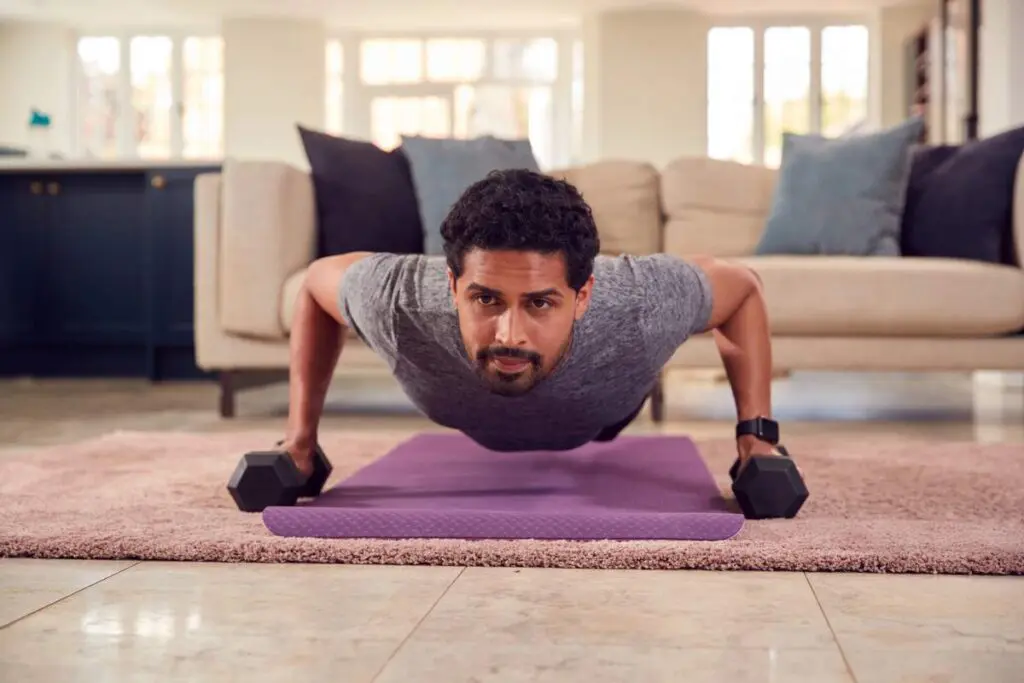
- Do modified push-ups for 60 seconds — wall, counter, or floor — to engage your chest, arms, and core without aggressive impact.
- Stand tall and rotate your torso gently for 60 seconds by keeping your hips forward and slowly twisting from side to side, which helps release tension and improve spinal mobility.
- Perform glute bridges or hip lifts for 60 seconds while lying on your back, lifting your hips up and lowering with control. This engages your posterior chain and relieves low-back stiffness.
- March or do low-impact cardio for 60 seconds at a pace that feels brisk but sustainable, helping your heart and lungs stay engaged.
- Cool-down (5 minutes): End with gentle stretching and slow, steady breathing. Reach your arms overhead, then fold forward to release your back; hug your knees or gently twist your torso while taking deep breaths to help your body transition into a calm state.
This longer session supports full-body engagement while helping shift your nervous system out of “busy mode” and into a calmer, more grounded rhythm, without wearing you out.
Progress Lives in the Ordinary
Staying active doesn’t require perfect routines or endless motivation. It asks for small, repeatable choices you can actually maintain. When movement fits into real life, it stops feeling like a chore and starts becoming part of how you take care of yourself. As your confidence grows, you can build on these habits with beginner strength training to continue improving your fitness and resilience.